
Photos Pre-Launch, Launch and Post-Launch
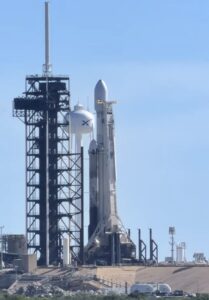
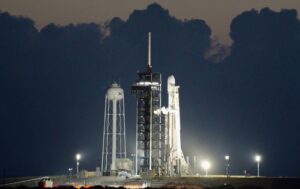
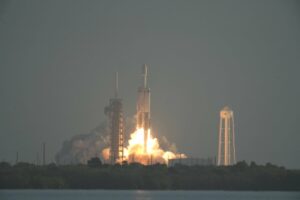
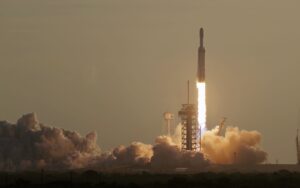
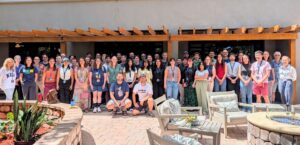
Read the Cornell Chronicle : https://news.cornell.edu/stories/2026/08/nasa-telescope-gives-hidden-exoplanets-chance-shine
Videos of the Launch

BUILDING TECHNOLOGIES FOR THE FUTURE OF SPACE SCIENCES
Photos Pre-Launch, Launch and Post-Launch
Read the Cornell Chronicle : https://news.cornell.edu/stories/2026/08/nasa-telescope-gives-hidden-exoplanets-chance-shine
Videos of the Launch
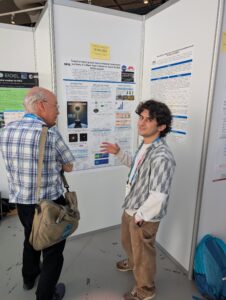
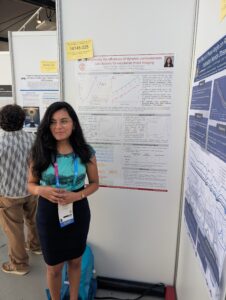
Saanika Choudhary, Aiden Zelakiewicz, and Dmitry Savransky all presented posters at this year’s SPIE Astronomical Telescopes + Instrumentation meeting in Copenhagen, Denmark.
On June 18th, 2026 Colby Merrill successfully defended their B exam, completing the requirements for the PhD program. You can see a recording of their talk below.
On December 19th, 2025 Grace Genszler successfully defended her B exam, completing the requirements for her PhD program. You can see a recording of her talk below.
Our paper “Forced Periodic Trajectory Reachable Set Analyses in the Earth-Moon System” was recently published in The Journal of the Astronautical Sciences. In this work, we explored two methods to approximate the set of forced periodic orbits relative to a naturally periodic orbit in the Earth-Moon system. We found that our sampling method was better-suited for approximating this set than the analytical method we use.
SIOS Lab graduate student, Colby Merrill, contributed to work that models the formation scenario of Dinkinesh’s strange satellite, Selam! The contact binary shape of Selam is likely a result of smaller moonlets merging at speeds near their escape velocities. This multi-moonlet formation scenario also has implications for binary asteroid satellites in general, and sheds light on the poorly constrained shapes of asteroid moons. The paper detailing these results, Multiple moonlet mergers as the origin of the Dinkinesh-Selam system, was published in Nature Communications on December 11.
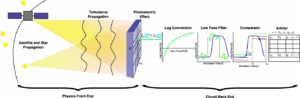 Event-Based Sensor Noise Modeling for Space-Based Space Domain Awareness, led by Dr. Rachel Oliver, has been published in the Journal of Astronautical Sciences. This work presents the most detailed, physics-based, end-to-end model for event-based vision sensors observing space objects created to date.
On July 14th, 2025 Duan Li successfully defended her B exam, completing the requirements for her PhD program. You can see a recording of her talk below.
As a member of the NASA/DART team, SIOSlab graduate student Colby Merrill contributed to work that was recently published in Nature Communications! The two articles focus on the morphology and evolution of ejecta created by the DART impact and how those features can be used to inform observations and future kinetic impact missions. The article “Elliptical ejecta of asteroid Dimorphos is due to its surface curvature” examines how momentum transfer into asteroids works as a function of surface curvature and provides recommendations for future asteroid deflection missions. The article “Morphology of ejecta features from the impact on asteroid Dimorphos” constrains the size distribution of ejected particles by the DART impact and finds that the complex multi-tail and spiral features in the ejecta are diagnostic features of a binary system.
SIOS Laboratory grad student Colby Merrill and recent SIOSlab graduate Dr. Jackson Kulik presented their research at the Astrodynamics Specialist Conference in Broomfield, CO. Colby presented research on creating new periodic trajectories in the Cislunar environment. Jackson presented research on comparing relative reachable sets around some spacecraft state.